Clumping Clay vs Lightweight Litter: Which Should You Pick? (October 2026)
Choose lightweight litter if carrying and pouring heavy bags is a strain; choose standard clumping clay if you prefer a denser litter and a familiar scoop routine. Clump strength varies by formula, so compare the specific litter as well as its weight.
On this page (8 sections)
- Clumping Clay Litter vs Lightweight Litter
- What is the difference between clumping clay and lightweight litter?
- Which litter is easier to carry and pour?
- Which one makes daily scooping easier?
- Does lightweight litter track more?
- Which litter controls odor better?
- What should you consider before switching?
- Which litter should you choose for your routine?
Clumping Clay Litter vs Lightweight Litter
Choose lightweight litter if carrying and pouring heavy bags is a strain; choose standard clumping clay if you prefer a denser litter and a familiar scoop routine. Clumping clay litter vs lightweight litter is a choice about handling, texture, and the clumps you remove every day.
Lightweight formulas can reduce the effort of lifting and pouring, but their clump performance depends on the formula. Standard clay can form tight clumps too, though heavier bags take more effort to move.
 Best for scented odor control
Fresh Step Advanced Odor Shield Clumping Cat
What is the difference between clumping clay and lightweight litter?
Clumping clay litter is a material and clumping style; lightweight litter describes lower weight, and it can use different materials. Some lightweight litters are clay based, while others use materials such as grass.
That means the categories overlap. A lightweight clay formula can clump, and a grass-based litter can also be lightweight and clumping.
For a broader look at how these terms work, see our guide to clay litter vs clumping litter. The key distinction here is how much you handle and how reliably the litter forms clumps you can lift out.
Is every lightweight litter clay?
No. Some lightweight formulas use clay, while others use plant-based materials.
SmartCat All Natural Clumping Cat Litter, for example, is made from grass seed and is described as a lightweight alternative to dense clay.
Material affects texture, pouring, and the way litter behaves in the box. If your cat is particular about paw feel, a sudden switch between materials may be more noticeable than a small change in bag weight.
Is all clay litter clumping?
No. Clay litter can be clumping or non-clumping, so check the exact type before buying.
Our guide to clumping litter vs non-clumping litter explains how those two formats differ in daily cleanup.
Which litter is easier to carry and pour?
Lightweight litter is usually easier to lift and pour because the same amount of litter weighs less. That can matter when you carry a bag from the car, pour into a high-sided box, or store litter on a shelf.
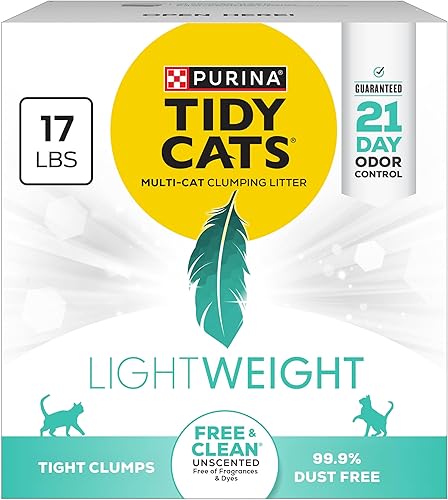
Purina Tidy Cats says its lightweight formula is 50 percent lighter than leading clumping litter, while still providing the same amount of litter. Its box weighs 17 lb, which makes the weight difference concrete for shoppers who find large containers awkward.
A standard clay option may require more effort to move. The Fresh Step Advanced packs here weigh 37 lb for 2 boxes, so plan for lifting and storage space before bringing them home.
If carrying is the main concern, read our lightweight cat litter clumping guide to understand how lighter formulas can still form clumps. You can also compare best lightweight low-tracking cat litter options if litter around the box is a concern.
Which one makes daily scooping easier?
The easier litter to scoop is the one that makes firm clumps without leaving crumbles behind. A heavier clay formula can be easy to scoop when its clumps hold together, and a lightweight formula still needs to clump well.
Fresh Step Advanced Odor Shield uses natural clay and forms tight clumps around urine and waste. Fresh Step Advanced Simply Unscented also forms tight clumps, without added dyes or fragrances.
Purina Tidy Cats says its lightweight formula forms tight, strong clumps. That combination can reduce the tradeoff between easier lifting and straightforward scooping.
How can you judge clump quality at home?
Scoop after the litter has had time to form a clump, and lift slowly over the box. If the clump stays together and clean litter falls through the scoop, the routine may feel manageable.
If clumps break apart, try scooping at a different time or using a scoop with slots suited to the litter particles. Remove waste regularly and follow the fill and care directions on the package.
Does lightweight litter track more?
Tracking depends on the litter particles, the box setup, and your cat's habits, not weight alone. A light particle may be carried on paws, but a product's weight label can't predict how much will land outside your box.
Try a mat with enough space for your cat to step off the litter and shake particles from its paws. Keep the box away from high-traffic paths if you can, and sweep around it often enough to notice whether a particular formula leaves more grit.
For a more targeted comparison, see our best lightweight unscented cat litter guide, which can help narrow choices when fragrance is also a concern. If dust matters during pouring and scooping, our best lightweight low-dust cat litter guide focuses on that feature.
Which litter controls odor better?
Odor control depends on the formula, how often you scoop, and whether its scent suits your home. Weight alone does not tell you how well a litter controls odor.
Purina Tidy Cats uses activated charcoal and is fragrance-free. The brand says it offers 21-day odor control when used as directed.
Fresh Step Advanced Odor Shield includes activated charcoal and has an extra-strength Febreze Gain scent. Fresh Step Advanced Simply Unscented also uses activated charcoal and has no added fragrances or dyes; the brand says both Fresh Step formulas offer 15-day odor control under the stated package terms.
These are brand claims, not a promise that every household will get the same result. Scoop daily, keep the box clean, and consider unscented litter if fragrance bothers someone in your home.
What should you consider before switching?
Change litter gradually and watch whether your cat keeps using the box comfortably. A new texture, particle size, or scent can matter as much as the weight.
Mix a small amount of the new litter into the current litter, then increase it over several days if your cat accepts the change. Keep the box in its usual location and avoid changing several parts of the setup at once.
For kittens, consider the texture and the litter type as part of the choice. Our guide on whether kittens prefer clumping or crystal litter discusses how to think about that decision.
If you want to stay with clay but prefer a non-clumping formula, see our best non-clumping clay cat litter guide. Choose based on the cleanup routine you can keep up with, not just the bag's weight.
Which litter should you choose for your routine?
Choose lightweight litter when lifting and pouring are the biggest hassles; choose standard clumping clay when its texture and familiar handling suit your routine. Compare clump quality separately, since both types can form tight clumps.
Purina Tidy Cats combines a lightweight formula with an unscented, low-dust design and tight clumps. The Fresh Step clay options focus on tight clumps, with either a scented or unscented formula.
SmartCat offers a different lightweight route with grass seed instead of clay. Pick lightweight litter if easier handling matters most, and pick the specific material and formula your cat will use consistently.
Frequently asked questions
Is lightweight cat litter as good as clumping clay?
It can be, if the specific formula forms firm clumps that stay intact during scooping. Lightweight describes how much the litter weighs, not how well it clumps, so compare the clump claims and watch whether scooped clumps crumble in your own box.
Does lightweight litter last as long as regular clay litter?
Weight alone doesn't tell you how long a litter will last. Check how much litter the container holds, follow the package directions for fill depth, and track how often you need to add or replace litter in your home.
Is lightweight litter harder to scoop?
Not always. Scoop performance depends on the formula's clumps and your timing, while lighter particles may feel different as you sift.
Remove waste regularly and use a scoop that lets clean litter fall back into the box.
Can I switch from clay to lightweight litter?
Yes, but a gradual change can help your cat adjust to a different texture or scent. Add some new litter alongside the familiar type, then increase the new litter over several days if your cat continues using the box normally.


