Cat Waste and Cleanup: The Complete Buying Guide
The best litter disposal system matches your cat count, waste routine and odor concerns. Choose a hands-free pail for sealed storage, continuous liners for flexible bag sizes, and separate cleaners for the box and surrounding area.
On this page (12 sections)
- What does a litter disposal system do?
- Which types of cat waste bins should you compare?
- How do you choose cat litter refill bags?
- How do you load and empty a litter disposal pail?
- Which Litter Genie pail should you choose?
- How should you dispose of cat litter?
- Which scoop and liner make cleanup easier?
- How do you control litter box odor?
- How should you clean a litter box and its surroundings?
- How do you manage litter outside the box?
- Explore cat waste and cleanup by topic
- What should you buy first?
The best litter disposal system matches how often you scoop, how many cats use the box and where the waste bin will sit. Choose a sealed pail for odor control, a continuous liner for flexible bag sizes, and a separate cleaning plan for the litter box and nearby floor.
A one cat home that scoops each morning needs a different routine from a multi cat home that scoops twice a day and empties a pail several times a week.
Cat waste cleanup is easier when each task has a place. Scoop waste into the disposal pail, tie and remove the filled liner before it becomes too heavy, then clean the box and the area around it on a regular schedule.
Think of the system in three steps. The scoop determines how cleanly waste leaves the box, the pail determines how safely it waits between trash days, and the cleaning tools determine how fresh the room stays after the waste is gone.
A sealed pail suits a household that keeps waste indoors between collections. An open bin or a loose tied bag may be simpler, but odor and handling tend to become part of daily life in a small room.
Continuous liners suit people who want to control bag size. You can cut a short bag for a quick daily change or a longer bag when you plan to leave the pail for several days.
Cartridge refills suit a different habit. Loading follows one set route through the pail, so the routine can feel predictable once you learn the pull, tie and load steps.
For odor, separate the waste pail from the litter box itself. A pail can contain waste after scooping, while the box may still need fresh litter, daily removal of soiled material and periodic washing.
Space also shapes the right choice. A tall pail can sit beside a box in a corner, while a wider pail may need a laundry room or garage, and a pail placed too far away is less likely to be used after every scoop.
If you already own a pail, focus on the refill and care sections first. A correct refill, a clean seal and a regular emptying schedule often improve results more than replacing a pail that still works.
The goal is a routine you can repeat without hesitation. It should work whether you care for one cat or several and whether the litter area is a bathroom, utility room or quiet corner.
What does a litter disposal system do?
A litter disposal system gives scooped waste a closed place to go between trash days. The useful features are a controlled opening, a liner that seals waste and a removal method that keeps the full bag manageable.
The control begins at the opening. Waste should enter the pail without spilling on the floor, and the opening should close again so stored waste is not exposed to the room.
Some pails use a trap door or funnel to drop waste into the liner. Others rely on a cartridge that feeds continuous film through the pail.
A trap door design can suit a person who scoops with one hand and holds the scoop in the other. The pedal or lever provides the opening action, and the waste falls through a route that aims to keep hands away from the lid.
A cartridge design can suit a person who wants a repeatable loading routine. Film is pulled through the center, tied to form the bottom of the bag, and then pushed down so each new section starts in the same position.
Both designs aim to keep waste inside the container instead of leaving tied bags near the litter box. That closed storage is the main benefit in a shared living space.
A system does not replace scooping. Remove clumps and solid waste at least daily, then close the disposal pail after each use.
Daily removal still matters because the box is where odor starts. A pail cannot freshen litter that has been in the box for several days, and it cannot remove urine soaked material mixed with clean litter.
The liner also has a practical role beyond odor. It separates waste from the pail, helps you carry the full section to the trash, and reduces the need to wash the pail after each change.
Removal method matters for safety and comfort. A bag that is too full can be heavy, awkward to lift and more likely to tear, so changing it before it reaches that point is good care.
Many owners find a short bag easier to manage than a long bag filled to the top. Continuous film supports that choice because you can cut the length to the amount of waste you expect to store.
Check the pail after loading a new section. The film should hang in a straight path without folds across the opening, and the bottom knot should sit low enough to hold the first waste without slipping.
Keep the pail close enough for use after scooping, stable enough not to tip, and away from a spot where a cat may climb or knock it over.
For automatic litter boxes, the waste path works differently. Read How Does an Automatic Litter Box Dispose of Waste? to see how a machine transfers waste into a drawer or container.
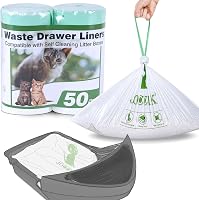
For a Litter-Robot, compare Litter-Robot waste drawer bags that fit its drawer.
Which types of cat waste bins should you compare?
The main types of cat waste bins are hands-free pails, cartridge pails, ordinary lidded trash cans and temporary sealed bags. The right type depends on access, odor control and refill cost over time.
Hands-free pedal pails
A pedal pail lets you open the waste inlet with your foot. This can help when your hands are holding a scoop or when you want to avoid touching a dirty lid.
The Lucky Champ Litter Champ uses a spring-loaded trap door, a rubber lid seal, an inner trap door and a sealed front door. Its 4-gallon pail includes a 21-ft continuous liner, a heavy-duty side-mount scoop and a pre-loaded liner.
The Litter Champ uses one-piece ABS resin and has a sturdy carry handle. Its liner can be cut to the length you need, tied off and restarted with a new knot.
Choose this style if you want hands-free loading and a larger pail. The trade-off is that you need the compatible continuous liner format for future refills.
Cartridge-based pails
Cartridge pails use a refill cartridge that feeds film through the center of the pail. You pull the film through, tie the bottom and load the cartridge into the top of the container.
The Litter Genie Ultimate Cat Litter Disposal System refills use 7-layer film with odor Barrier technology. The cartridges fit Litter Genie standard, Plus and XL pails, and each refill can last up to 2 months for one cat.
Cartridge systems can make loading straightforward when the refill and pail match. The main buying decision is the pail size and the long-term refill format.
Compare the two product families in Litter Zero vs Litter Genie if you are deciding between different disposal systems.
Lidded trash cans
A small lidded trash can can work when you remove tied bags often and the bin stays near a larger household trash container. It gives you more freedom to choose ordinary bags, but it may not seal odor as tightly as a purpose-built pail.
If you want this route, compare opening size, lid fit, liner capacity and how easily you can wash the inside. Our cat litter trash can guide covers trash cans suited to scooped waste.
Temporary sealed bags
A tied bag is useful when the main bin is outside, upstairs or too far from the litter box. Use a strong bag, close it securely and move it to the outdoor trash according to local rules.
Temporary bags are simple, but they can leave odor in the room if waste waits for collection. They also create more handling than a closed disposal pail.
How do you choose cat litter refill bags?
Choose cat litter refill bags by pail design, liner length, sealing method and the number of cats you have. A refill that fits the opening but does not match the loading system can waste time and film.
Continuous liners let you cut a bag to the amount of waste you have. This can reduce unused film when you empty the pail often, while a longer cut can help when several days of waste must fit in one bag.
Cartridge refills are loaded through the center of the cartridge and pushed into the pail. Check whether the refill is made for a standard, Plus, Style, Design, XL or XL+ pail before ordering.
Use the best cat litter disposal bags guide to compare bag formats, odor barriers and practical use cases.
For the Litter Genie system, the 3-pack Litter Genie Refill Bags contains 28 total ft of continuous film and can provide up to 6 months of supply for one cat. The film can be cut to your preferred bag length.
These bags use multi-layer film with odor-locking barrier technology. They fit the listed Litter Genie pail families, but you should still compare your pail name with the compatible models.
See Which Litter Genie Refills Fit Your Pail? for a pail-by-pail refill check. If you are choosing a specific refill pack, read Best Litter Genie Refill Bags before you stock up.
How do you load and empty a litter disposal pail?
Load the liner according to the pail design, then empty it when the filled section is easy to tie and carry. A clean cut and a tight knot matter more than trying to use every inch of film.
For a Litter Genie cartridge, pull about 1 ft of film through the center, push it down through the pail and tie a knot at the bottom. Open the lid and funnel, place the cartridge on top and push the refill through to the bottom.
When the bag is full, use the pail's cutting method, tie the filled section and pull fresh film down for the next section. Avoid overfilling because a heavy bag is harder to remove without tearing.
The Litter Champ uses a continuous 21-ft liner. Open the front door, pull the liner down, cut it on the built-in door-mounted cutter, tie off the full bag and knot the new end.
The Litter Champ liner can last up to 10 weeks for one cat, while multi-cat homes may change it more often. The actual interval depends on how much waste enters the pail and how long you cut each bag.
For a Litter Genie-specific walkthrough, read How to Empty a Litter Genie. If the setup step is the problem, How to Set Up and Use a Litter Genie gives the process in a visual format.
Which Litter Genie pail should you choose?
Choose a Litter Genie pail by capacity, refill access and the amount of floor space near the litter box. Standard and Plus models suit different routines, so compare the exact pail before buying refills.
The Litter Genie refill system is designed to work across standard, Plus and XL pails, but the pail's size still affects how often you empty it. A larger pail may reduce trips while taking more room beside the box.
Read Best Litter Genie Pails for a closer comparison of pail options. If you are comparing the two common models, see Litter Genie vs Litter Genie Plus.
Easy Roll is another Litter Genie option with its own handling design. Compare the differences in Litter Genie vs Easy Roll before choosing a pail for a narrow space or a high-use litter area.
For a Litter Champ, the refill decision is different because it uses continuous refill liners rather than Litter Genie cartridges. See Which Refill Bags Fit a Litter Champ? before replacing the liner.
If you want alternatives to the branded refill format, compare Best Generic Litter Genie Refills and confirm that the refill matches your pail.
How should you dispose of cat litter?
Dispose of cat litter in a tied bag placed in household trash when local rules allow it. Do not flush litter by default, because litter and waste can create problems for plumbing or wastewater systems.
The tied bag step is important even when waste arrives in a sealed pail. Once a section is cut and tied, it should stay closed during the trip to the household or outdoor trash container.
Scoop solid waste and clumps into the liner without adding unnecessary clean litter. Tie the filled section before it becomes too heavy, then move it to the correct household or outdoor waste container.
Leaving clean litter in the bag adds weight without adding value. It also makes a bag harder to carry and can cause a tear during handling, especially when the bag has several days of waste inside.
Do not add other household items to the litter bag by default. Keep the bag dedicated to litter waste so it can be handled, stored and collected according to local guidance without mixing in unrelated material.
Different litter materials may have different local guidance. Clay, crystal, pine, walnut and tofu litters should be handled according to the package instructions and your local waste rules.
Local rules can vary by area and by waste size. A small amount of household litter in a tied bag may be treated differently from a large cleanout, so check local guidance for full box changes and multi cat households.
Flushing deserves a clear pause. Even litter described as plant based or flushable should not be flushed unless the litter maker and local wastewater guidance both allow it for your area.
Plumbing is only part of the concern. Wastewater treatment systems are designed for specific materials, and litter that passes through a home pipe can still create a problem farther along the system.
For a full cleanout, empty the box in stages when practical. Remove the bulk of the litter, tie that section, then clean residue from the box before adding fresh litter and a new liner if you use one.
Wash hands after handling litter and after tying a bag. Keep litter waste away from food preparation areas, and clean the scoop or other tools that touched waste before returning them to storage.
Store full bags in a closed container until collection if they must wait indoors. A sealed pail or a lidded outdoor bin can keep the bags contained, but the pail should not be used as long term storage.
Read How to Dispose of Cat Litter for a fuller breakdown of household trash, flushing concerns and disposal habits.
Which scoop and liner make cleanup easier?
Choose a scoop that matches the litter granule size and a liner that fits the box without bunching across the walking area. The scoop controls what enters the disposal system, while the liner protects the box during full cleaning.
A narrow scoop can help with small clumps and corners, while a wider scoop can move more litter at once. The best choice depends on the box shape, litter type and how easily you can reach the back.
In a deep box, a longer handle can help you reach the far side without leaning over the litter. In a low sided box, a shorter handle may give you better control when you scrape along the bottom.
The slots or holes matter as much as the width. Slots that are too wide can let small clumps fall through, while holes that are too small can clog with fine litter and make scooping slower.
Try the scoop with the litter you actually use. Clumping litter often lifts in one piece when the scoop is angled well, while non clumping litter may need a slower pass so clean grains can fall through.
For solid waste, slide the scoop under the material instead of pressing down on it. That motion keeps the waste intact and reduces the chance that it breaks apart and leaves residue in the litter.
A narrow scoop can be helpful for corners, edges and the area under a low entry. A wider scoop can help lift a large clump in one motion, which can reduce repeat passes in a busy box.
Some households keep two scoops in rotation. One can be used while the other is washed and dried, and this setup can help when daily scooping is paired with a weekly deep clean of the box.
Compare options in Best Cat Litter Scoops. Use a scoop that lets clean litter fall through while lifting the clump intact.
Box liners can speed up a full change, but some cats dislike the feel of loose plastic or may scratch it. Check the liner size, thickness and fit before covering the entire box.
A liner should sit flat under the litter without folds that collect moisture. Corners should be tucked so the liner does not bunch along the walking path or create a slippery surface for the cat.
Our best cat litter box liners guide explains when liners help and when a bare box may be easier to maintain.
How do you control litter box odor?
Control odor with daily scooping, enough clean litter, a closed waste container and a cleaner suited to the mess. Deodorizer spray can help with soiled litter, but it should not replace removal of waste.
Zero Odor Litter Box Odor Eliminator Spray is a 16 oz spray designed for clay, crystal, pine, walnut and tofu litter. Zero Odor describes its formula as Molecular Conversion that bonds with odor molecules and converts them to non-odor molecules.
The spray is used after scooping, with the directions calling for the four corners and a strip down the center. It has a temporary tracer scent that fades, rather than a lasting fragrance.
That pattern matters because litter odor often collects where urine has soaked into litter near the corners. Spraying those areas after waste removal can treat the remaining litter before the next use.
Use a small amount first if your cat is sensitive to changes around the box. The spray is intended for litter odor, while other surfaces may need a cleaner made for that material.
Watch the box after the first use. A cat that enters, digs and uses the box as usual is a good sign, while avoidance or scratching at the litter can mean the routine or scent needs a pause.
Do not spray so much that the litter becomes wet. The product is meant as a light treatment after scooping, and excess liquid can change the feel of the litter in a way that discourages use.
Keep the spray out of the waste pail routine. The pail handles sealed storage after scooping, while the spray treats litter that remains in the box for the cat to use again.
For a closer comparison of odor products, read Best Cat Litter Box Deodorizers.
Pair the spray with the basics that control odor at the source. Scoop daily, keep enough clean litter in the box, remove soaked clumps promptly and wash the box on a regular schedule.
If odor persists after those steps, check the room as well as the box. A mat, floor, wall or nearby fabric can hold odor that makes it seem as if the litter itself is the only problem.
Store the bottle upright with the cap closed and keep it within reach of the scooping area. That placement makes the after scoop step easier to repeat without turning it into a separate chore.
How should you clean a litter box and its surroundings?
Clean the litter box with a pet-safe approach that removes residue without leaving a strong scent. Empty the box, wash away buildup, rinse well and dry it fully before adding fresh litter.
A regular box needs a full wash as well as daily scooping. Clean around the rim, corners and bottom where urine or damp litter can collect.
A robot litter box has more parts and a different waste path. Follow a maintenance routine that separates removable waste parts from electrical components.
Read How to Clean a Robot Litter Box before washing an automatic unit. Keep water away from parts that should not be immersed.
Choose a cleaner based on the surface and the type of odor. Best Litter Box Cleaners covers cleaners for routine box care.
Urine on a floor, rug or other porous surface may need an enzyme cleaner. Best Enzyme Cleaners for Cat Urine focuses on products made for that specific problem.
Avoid mixing cleaning products. Ventilate the room, follow the product directions and keep your cat away from wet surfaces until they are ready for use.
How do you manage litter outside the box?
Manage tracked litter with a mat, regular sweeping and a vacuum suited to pet hair and fine debris. The best cleanup routine removes particles near the box before they spread through the home.
Place the mat where your cat steps out, but leave enough space for the cat to turn and walk naturally. Shake or vacuum the mat often so it does not become a second litter source.
Hair can collect around the box and on nearby furniture. Compare Best Cat Hair Removal Tools for brushes, rollers and other ways to gather loose hair.
A vacuum helps with loose litter, hair and dust around the room. See Best Vacuums for Pet Hair when you need a tool that can handle repeated pet cleanup.
Use a disposal bin for the waste that comes from scooping, not as a substitute for floor cleanup. Keeping the scoop, bags, cleaner and vacuum in one area makes the routine easier to repeat.
Explore cat waste and cleanup by topic
- How to Refill Litter Genie Bags
What should you buy first?
Start with a sealed litter disposal system, then add refill bags that match its design. A scoop, box liner, odor product and surface cleaner complete the basic cat waste and cleanup setup.
For a hands-free pail with a 4-gallon capacity, spring-loaded trap door and included continuous liner, the Litter Champ suits homes that want flexible bag lengths and fewer trips to the trash.
For a cartridge system, Litter Genie refills offer continuous film, 7-layer construction for the Ultimate cartridges and compatibility across the stated Litter Genie pail families. Compare the exact refill format before ordering.
For litter odor, Zero Odor's 16 oz spray is designed for several litter types and has no lasting fragrance. Use it after scooping and keep full cleaning as part of the routine.
Pick the system that fits your space and cat count. Choose Litter Champ for hands-free pedal use and a cut-to-length liner, Litter Genie for a cartridge-based pail family, and separate cleaning products when odor or tracked litter needs more attention.
Frequently asked questions
What is the best litter disposal system for one cat?
A compact litter disposal system with a sealed opening and a refill that lasts for weeks can suit one cat. Litter Genie refills are designed to last up to 2 months for one cat, while the included 21-ft Litter Champ liner can last up to 10 weeks for one cat.
Your scooping frequency and cat litter type still affect how quickly you fill a bag.
Can cat litter go in the regular trash?
Cat litter can usually go in household trash when local rules allow it, but scoop waste into a tied bag first and keep the bag inside a closed bin. Do not flush litter unless the litter maker and local wastewater guidance specifically allow it.
Check local disposal rules for large amounts or special litter types.
How often should you empty a cat litter disposal system?
Empty a cat litter disposal system before the bag becomes too heavy to carry or the pail becomes difficult to close. A one-cat home may get several days from a larger bin, while a multi-cat home will need more frequent changes.
Daily scooping keeps waste moving into the pail instead of sitting in the box.
Do litter disposal systems remove all odor?
A litter disposal system helps contain waste odor between emptying, but it cannot replace daily scooping, clean litter and regular box washing. Seals, trap doors and multi-layer liners reduce exposure when the pail is closed.
Odor spray can help with soiled litter, while enzyme cleaner is better suited to urine on hard surfaces.
Are generic refill bags compatible with every litter pail?
No. Refill bags are made for particular pail designs, so check the pail model and refill format before buying.
Some continuous liners are cut to length, while cartridge systems feed film through a center opening.
A bag that looks similar may not load, seal or fit correctly.